Granite vs Marble: A Complete Guide to Picking the Right Countertop for Your Kitchen
When I started planning my dream kitchen, one big question quickly came up—granite or marble? Both stones looked stunning in photos, yet they seemed so different in many ways. Therefore, I decided to research everything I could to make the right choice.
If you are also confused, you are not alone. Many homeowners struggle to choose between these two popular options. Luckily, this guide will help you understand the key differences in simple words.
Before we dive deep, it’s worth mentioning that many families in Dublin and Columbus, Ohio, trust granite countertops for kitchen because of their strength and long-lasting beauty. However, marble also has its own timeless charm that many people love.
Throughout this guide, I will share my personal insights, comparisons, and tips to help you pick the perfect countertop for your kitchen.
What Are Granite and Marble?
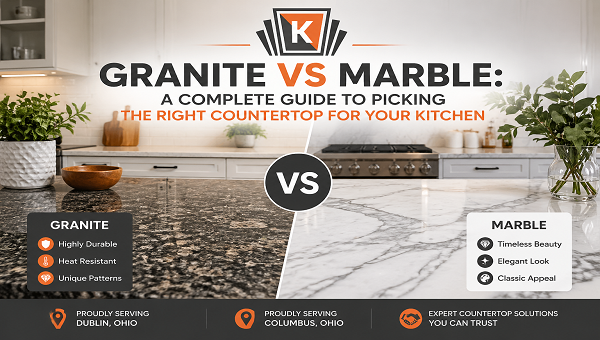
What Is Granite?
Granite is a natural stone. It forms deep inside the Earth under extreme heat and pressure. Miners cut it into large blocks, and then it is polished into slabs. Since every slab has unique patterns, no two granite countertops look exactly the same.
Granite is incredibly durable. It can withstand heat, scratches, and the daily wear and tear that happens in a busy kitchen. It’s perfect for homeowners in Dublin and Columbus, Ohio, who want a countertop that can handle a lot of use.
What Is Marble?
Marble is also a natural stone, but it forms when limestone goes through heat and pressure. Unlike granite, marble usually has soft, flowing veins in soft colors like white, grey, and black. As a result, many people choose marble countertops for their elegant and luxurious look.
However, marble isn’t as durable as granite. It’s more susceptible to scratches and stains. For families in Dublin and Columbus, Ohio, who want a countertop with timeless beauty but don’t mind a bit more maintenance, marble is a fantastic option.
Granite vs Marble: Key Differences
Let’s compare these two stones in the most important areas.
Durability
Granite is known for being very tough. It resists scratches and chips, which makes it perfect for busy kitchens. Granite can handle hot pots, sharp knives, and other kitchen tools without getting damaged.
On the other hand, marble is much softer. It can be scratched easily and is more prone to staining. For example, acidic liquids like lemon juice and vinegar can leave marks on marble countertops.
Appearance
Granite has a more varied appearance. Its colors can range from light whites and greys to deep blues, reds, and browns. The patterns in granite can be very bold and striking, or they can be more subtle.
Marble, in contrast, is known for its smooth, elegant appearance. Its soft veins give it a sophisticated and classic feel. Marble is often associated with luxury and timeless design.
Maintenance
Granite countertops are relatively easy to maintain. You can simply wipe them down with warm soapy water and dry them with a cloth. However, granite needs to be sealed every 1-2 years to protect it from stains.
Marble requires more care. While it can be cleaned with soapy water, you must be extra careful with acidic substances. Marble also needs to be sealed regularly to prevent stains and etching.
Cost
Granite tends to be more affordable than marble. However, the price of granite can vary based on the color and pattern you choose. High-end granite can still be expensive, but it is generally cheaper than marble.
Marble, especially high-quality varieties, can be quite expensive. It is often considered a luxury material, and its price reflects that.
Heat Resistance
Both granite and marble are heat-resistant. However, granite holds up better in high temperatures. If you place a hot pot or pan on a granite countertop, it’s unlikely to cause any damage. With marble, while it’s heat-resistant, prolonged exposure to hot objects can cause discoloration or damage.
Installation
Granite countertops are heavy, which means that they require proper installation to avoid cracking. It’s important to have professional granite countertop installers in Dublin and Columbus, Ohio, for this.
Marble is also heavy but might be a bit more fragile due to its softness. It requires careful handling during installation.
Which One Is Right for You?
So, now that you know the differences between granite and marble, how do you decide which one is right for your kitchen? Here are some questions to ask yourself:
- How much use does your kitchen get? If you cook often, granite is probably a better choice. Its durability makes it ideal for busy kitchens.
- What’s your budget? Granite is more affordable than marble, so if you’re working within a budget, granite might be the best option for you.
- Do you want a luxurious look? If you’re looking for an elegant, timeless feel, marble might be what you’re after.
- How much maintenance can you handle? If you don’t mind regularly maintaining your countertop, marble can be a stunning addition. But if you prefer something low-maintenance, granite is the way to go.
Conclusion
Both granite and marble have their advantages. It all depends on your style, budget, and how much maintenance you’re willing to put in. Whether you choose granite or marble, you’ll be adding a beautiful, timeless material to your kitchen.
Granite offers durability and a wide range of colors and patterns, while marble brings a sense of elegance and luxury. The decision is yours!
FAQs
1. Which is more durable, granite or marble?
Granite is more durable than marble. It is resistant to scratches, heat, and stains, making it ideal for busy kitchens. Marble, while elegant, is softer and more prone to scratching and staining.
2. How can I maintain my granite countertops?
Granite countertops are easy to maintain. Simply clean them with warm, soapy water and a soft cloth. Remember to seal the surface every 1-2 years to protect it from stains and maintain its shine.
3. Is marble a good choice for kitchen countertops?
Marble is a beautiful option, known for its timeless and elegant appearance. However, it requires more maintenance than granite. It is more prone to stains and scratches, especially from acidic substances.
4. How much do granite and marble countertops cost?
Granite tends to be more affordable than marble, but prices can vary based on the color and pattern you choose. Marble, especially high-quality varieties, is usually more expensive due to its luxurious appeal and unique veins.